

Small-Group Tours in Romania | Transylvania, City Breaks, the, …
24 March 2026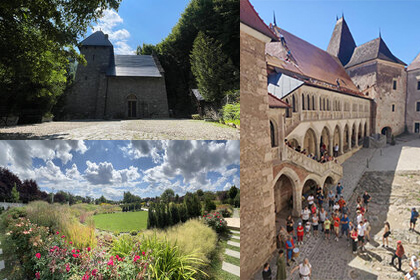
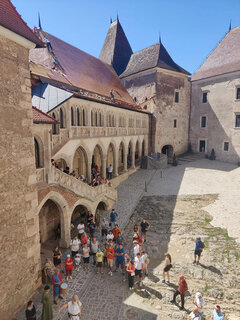
Corvin Castle in Eisenmarkt is one of the most beautiful fortresses in Eastern Europe. During peak visiting seasons, the castle hosts live performances that reenact life as it was in the past.
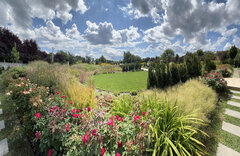
Zoe’s Gardens in Banpotoc are worth a visit from spring through fall. | Photo: Alina Sabou
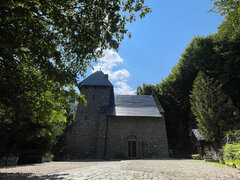
The Colț Stone Church is said to have served as a source of inspiration for Jules Verne. | Photos (2): Raluca Nelepcu
A cool breeze sweeps through the castle courtyard, carrying with it the scent of damp stone and ancient tales. If you walk straight across the courtyard, surrounded by the shadowy walls of the Hunyadi Fortress, you’ll find a well. Tourists read the text on the information board and then gaze thoughtfully into the well. The board states that the well is 28 meters deep. “Here,” the tour guide says quietly, tapping his finger on a weathered inscription, “three prisoners dug for 15 years. They were searching for water—and hope.” The man smiles sadly as he continues. “They were promised freedom if they found the spring. But when the water gushed forth, the mistress forgot her promise. So the men carved into the stone, in Turkish: ‘Aveți apă, dar n-aveți inimă’—‘You have water, but no heart.’”
The wind sweeps over the parapet, making a flag flutter. For a moment, it seems as if you can see them—the three Turkish prisoners, bent over the stone, their hands bloodied, their faces marked by dust. Perhaps it was on a day like this that one of them paused, lowered his pickaxe, and realized he had been betrayed.
The Stone Heart of Eisenmarkt
Anyone who visits the fortress in Eisenmarkt/Hunedoara immediately senses that this is not merely a building, but a gateway to another era. You reach the castle by crossing a long bridge that spans the Zlaști stream. It sits enthroned on a rock, its towers with slate-covered roofs soaring into the sky, its walls bearing the marks of centuries. It was built in the 15th century by Iancu de Hunedoara, a prince and military leader whose fame extended far into Central Europe. Admission to the castle isn’t exactly cheap, but it’s definitely worth it. Adults pay 50 lei, seniors 25 lei, schoolchildren and college students 12 lei each, and preschoolers get in free.
The interior is a labyrinth of halls, galleries, and spiral staircases. The grand knights’ hall, with its vaulted ceilings and tall windows, feels like a room still waiting for a celebration. The chapel smells of cold stone, of history. The air is heavy with stories, and every sound echoes—footsteps, voices, the distant call of a bird.
Hunyadi Fortress is one of the most beautiful castles in Eastern Europe—and it embodies everything that makes Transylvania in Romania so special: grandeur, darkness, and mystery. Especially in the late afternoon, when the sun streams diagonally through the arched windows, the walls glow with a reddish light, and the moat is already in shadow. Then it feels as if you yourself were a character from a chronicle of times long past.
I Giardini di Zoe: A Touch of Tuscany
About a half-hour drive from Eisenmarkt, in the small village of Banpotoc, a surprise awaits visitors—one that seems completely out of place in the rugged landscape of Transylvania: I Giardini di Zoe. An Italian garden, designed by Giovanni Salvatelli, an entrepreneur from the Marche region who fell in love with the hills of Transylvania and created his own personal paradise here.
As soon as you enter, you’re enveloped by the scent of lavender and rosemary. The floral fragrances that surround you, of course, depend on the season. Travertine terraces lead up to small pavilions, nestled among hedge mazes and sparkling fountains. In summer, bees buzz everywhere. It is a place of tranquility where you can leave the hustle and bustle of everyday life behind.
A visit to the Giardini di Zoe is a truly special experience, especially in summer. If you arrive early in the morning, when the dew still clings to the roses, you’ll experience the garden at its most beautiful. The colors seem more intense, the light softer. Benches line the paths, inviting you to enjoy moments of quiet. You can linger here for hours, letting your gaze wander over the artful interplay of plants and shapes, and imagine you’re in a Tuscan manor house.
Entrance costs 25 lei, and the garden is open daily until evening. Picnic blankets are allowed, but pets are not. Zoe’s Garden is especially beautiful in late spring or early fall, when the sun is mild and the crowds are manageable. Here’s an insider tip: Stay until the “golden hour,” when the light shimmers over the hills of Banpotoc—that’s when I Giardini di Zoe transforms into a fairy tale of light and shadow that you won’t soon forget.
On the Trails of the Retezat
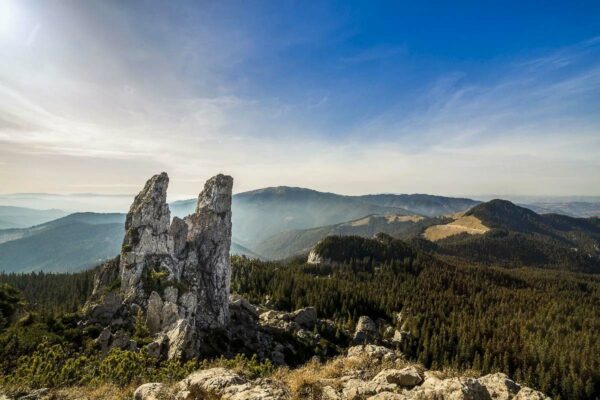
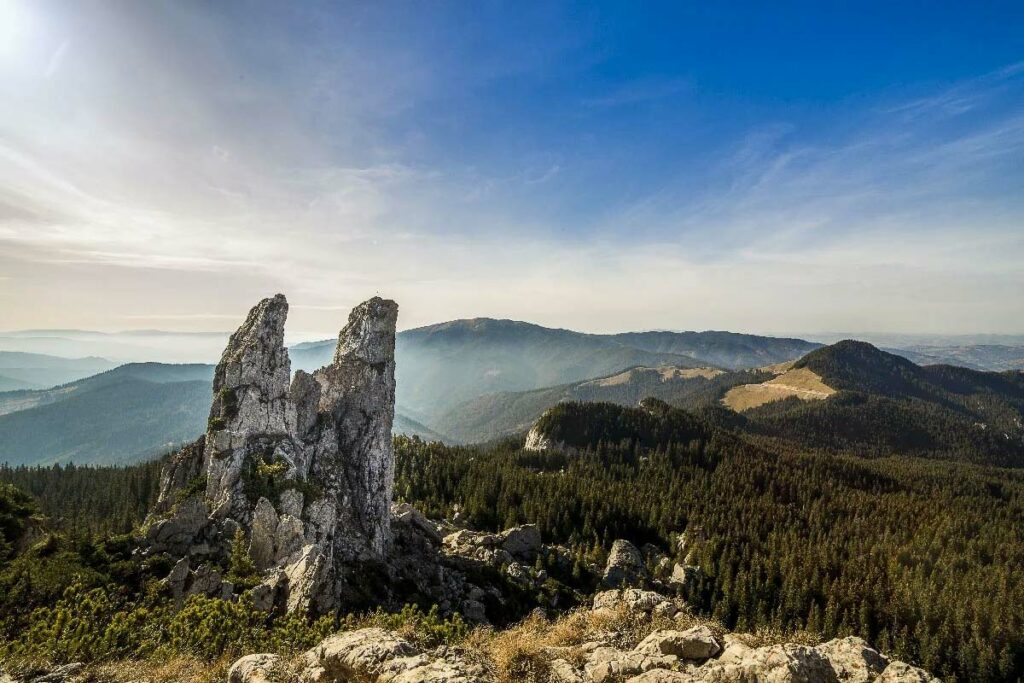
From the gentle southern hills, the journey continues westward, where the landscape becomes wilder. Here rise the Retezat Mountains, one of the most spectacular mountain ranges in the Carpathians. It is part of Romania’s oldest national park and a paradise for hikers, photographers, and nature lovers.
The peaks soar to over 2,500 meters, and nestled among them are more than forty glacial lakes, clear and still as mirrors. The largest of them, Lake Bucura, shimmers in a dark blue that appears almost black in the sunlight. The sky is reflected in its waters, and anyone who spends the night on its shore will witness one of the region’s most impressive natural spectacles: a sunrise during which the fog rises from the valleys and the first light creeps over the rugged ridges. The ascent to the highest point, Peleaga Peak (2,509 m), is challenging but rewarding. From the top, the world spreads out like a green sea of valleys, forests, and distant villages.
For less experienced hikers, the national park also offers easier trails, such as the one from Râușor up to Lake Stevia. Sturdy footwear, a rain jacket, and plenty of water are essential—the weather in the Carpathians can change within an hour. If you’re lucky, you might spot chamois or marmots along the way.
The Colț Stone Church as a Source of Inspiration
Among the attractions of the municipality of Râu de Mori is the Orthodox Colț Stone Church, one of the oldest documented monasteries in Romania. It was founded at the beginning of the 14th century, sometime between 1310 and 1315, by the noble Cândești family. In the 15th century, a hermitage was established there under the influence of the Prislop Monastery; it remained in existence until the second half of the 17th century, when Calvinist troops drove out the monks. Monastic life was not restored until 1989 by the Diocese of Arad, and since 1995, a small community of monks has once again been living there.
The church is built of stone. Its distinctive square tower, once erected for defensive purposes, housed three rooms, the upper two of which were formerly inhabited by monks. Inside are faded but valuable frescoes by the painter Ștefan, who also decorated the churches in Ostrov and Densuș.
Legends are associated with this place. It is said that Jules Verne drew inspiration for his novel *The Carpathian Castle* from the mysterious atmosphere of the church and the neighboring castle. Whether this is true is left to the reader to decide. From Colț, it is not far to Râușor at the foot of the Retezat Mountains.
Râușor – The Gateway to the Heights
The small resort town of Râușor is a great starting point for mountain hikes—and a popular destination even in the fall. Situated at an elevation of about 1,250 meters, surrounded by spruce trees and clear mountain streams, it has the charm of an alpine village.
In winter, Râușor transforms into a ski resort, but there’s plenty to do here during the warmer months as well. The chairlift—normally intended for skiers—also operates in the summer. It takes visitors up to a plateau at an altitude of about 1,560 meters. The ride takes only a few minutes, but it’s quite an experience: the forest spreads out below, and with every meter you glide higher, the view expands. Once at the top, a breathtaking panorama awaits—the view sweeps over the peaks of the Retezat Mountains, across valleys and distant villages, over a landscape shimmering in every shade of green.
Many hikers come up here simply to enjoy the sun, take photos, or have a picnic on the grass. There are benches, rest areas, and a small snack stand. In the late afternoon, when the light softens and the shadows lengthen, Râușor is perhaps at its most beautiful—quiet, peaceful, almost otherworldly.
Accommodations are available in all price ranges: from rustic mountain huts to cozy guesthouses with fireplaces and home-cooked meals. The Râușor Hut is particularly popular—it’s located right on the edge of the forest and offers 34 beds, homemade meals, and friendly hosts. In the evening, when the crickets chirp and the sky turns a deep blue, it feels as if time stands still.
Between Heaven and Earth
Visitors to Hunedoara County embark on a journey through space and time. One moment you’re standing on a Gothic bridge or peering into the depths of a medieval well; the next, you’re strolling through an Italian garden before reaching up to touch the sky in the mountains.
The magic of this region lies in its diversity. Hunedoara is not a destination for those in a hurry. It is a region that must be discovered slowly. Those willing to immerse themselves in it will be rewarded with memories that linger for a long time: the scent of pine trees in Râușor, the echo in the halls of Corvin Castle, the twilight over the Giardini di Zoe. Hunedoara is definitely a place you’ll want to return to again and again.
ADZ | From fortresses to breathtaking mountain landscapes
Hunedoara County is worth a visit any time of year
By: Raluca Nelepcu